Focus on blood vessels: what are the five biggest risks – and how damage can be minimised and in some cases even reversed
What smoking, drinking, LDL cholesterol, elevated blood sugar and high blood pressure can do to your blood vessels – and why consistent efforts to stop smoking, physical activity, a healthy diet and effective medication can reduce the risk and reverse certain types of damage.
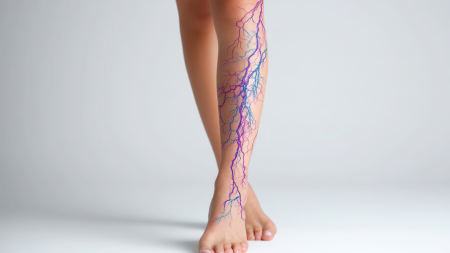
Arteries, veins and capillaries make up the body’s main arterial network, and also share the same blueprint: an external layer of tissue called the adventitia and an inner layer called the media made up of smooth muscle and connective tissue, the thickness of which varies depending on the type of blood vessel. The inner lining, the tunica intima, forms the boundary of the vascular lumen; it consists of a single layer of endothelial cells through which the exchange of oxygen and nutrients takes place.
Abnormalities in the adventitia, media or tunica intima – for example when the fine muscle cells no longer contract sufficiently and thus fail to adapt quickly to changes in blood pressure or when deposits impair the function of the endothelial cells – increase the risk of serious illnesses such as heart attacks and stroke. We know a lot about how arteriosclerosis develops, i.e. the hardening and thickening of the walls of blood vessels, and the build-up of plaque (atherosclerosis). Avoiding these risk factors can add years to your life expectancy. Now is a good time to remind ourselves what these risks are.
Risk no. 1: smoking.
Tobacco smoke puts a massive strain on the blood vessels. A key to this is in the way the endothelial cells, the delicate inner lining, function: this is where nitric oxide (NO) is produced, which dilates the blood vessels. NO is produced by the enzyme nitric oxide synthase. Free radicals from smoking cigarettes attack this enzyme – as a result, the synthase no longer produces NO, instead, they produce harmful free radicals. This causes inflammatory processes on the inner wall of the blood vessel, where plaque accumulates. The exchange of oxygen and nutrients is impaired at the sites where deposits form, while the narrowed lumen constricts the blood vessel, thus leading to higher blood pressure. If the plaque obstructs the blood vessel, there is a risk of stroke and heart attack. But the good news is that after giving up smoking, it only takes a matter of weeks to a few months for the enzyme nitric oxide synthase to recover.
Risk no. 2: alcohol.
Alcohol damages the cardiovascular system on multiple levels. Its waste products impair nitric oxide synthase in endothelial cells in a similar way to the free radicals that are released during smoking. Alcohol also activates the sympathetic nervous system, the part of the autonomic nervous system that stimulates the body to peak performance: stress hormones are released, the excretion of sodium and fluid in the kidneys decreases, the heartbeat accelerates and the muscles of the media contract. The result: increased blood pressure. Simultaneously, immune cells are activated, inflammation is stimulated, thus creating ideal conditions for fatty deposits and plaque to build up. Alcohol also disrupts the liver’s ability to metabolise fat, causing cholesterol levels to rise and accelerating the formation of plaque. The rupture of these deposits can lead to bleeding and thrombosis, which can result in blocked blood vessels. There is reliable data on the risks of consuming excessive amounts of alcohol: in 2017, American researchers published a review in in Lancet Public Health, which demonstrated the health benefits of not drinking for people who consume more than two alcoholic drinks per day. After only seven days, their systolic blood pressure had fallen by 5.5 mmHg and their diastolic blood pressure by 4.5 mmHg. Further studies show that arteriosclerosis can also be reversed if the damage is not yet severe.
Risk no. 3: LDL cholesterol
The risk posed by LDL was recognised as early as 1913 by the Russian Nikolai Anitschkow together with Semen Tschalatow in what is now a classic experiment: rabbits fed with egg yolk for weeks – egg yolk contains high levels of LDL and HDL cholesterol – were found to have noticeably high levels of fatty deposits in their blood vessels after they died. Since then, cholesterol has been known to damage the blood vessels. Today, however, we know that LDL builds up in the tunica intima where it undergoes oxidation. This triggers an inflammatory response, attracting immune cells; macrophages absorb oxidised LDL and transform into foam cells. Atherosclerotic plaques build up on these cells, the media and adventitia harden, become thicker and lose elasticity. As fundamental as the findings of the Russian experiment were, they also fed a myth: rabbits are not humans. Unlike rabbits, which are herbivores, omnivores are capable of metabolising eggs without necessarily increasing their cholesterol levels. High levels of LDL cholesterol in humans are usually genetically determined and can only be reduced to a limited extent by changing one’s diet and getting more exercise. Medication counteracts this effectively: it reduces LDL quickly, and studies show that, after just one to two years, the risk of thrombosis decreases by 20 to 30 per cent, with this occurring even more swiftly in cases featuring very high initial values.
Risk no. 4: too much sugar.
High glucose levels lead to sugar accumulating on fats and proteins in the inner wall of the blood vessel, causing the wall to stiffen. Nitric oxide synthase is also disrupted in this case, resulting in the consequences described above: inflammation, plaque formation, the increased risk of thrombosis. By keeping one’s blood sugar under control, it is possible to reverse some of the damage in a short period of time.
Risk no. 5: high blood pressure.
All of the factors outlined above favour high blood pressure, which in turn damages the vascular walls and causes them to store even more LDL. It becomes a vicious circle. While this may sound ominous, the vascular system is highly resilient: by taking steps to counteract this, such as taking medication to lower blood pressure and cholesterol when necessary, getting plenty of exercise and eating a healthy diet, it is possible to not only slow down arteriosclerosis, but even reverse it.