«THE LUCERNE TOOLBOX 3»: A digital roadmap for breast cancer
An international team led by Professor Peter Dubsky has developed a toolbox demonstrating how artificial intelligence can help improve the detection and treatment of breast cancer.
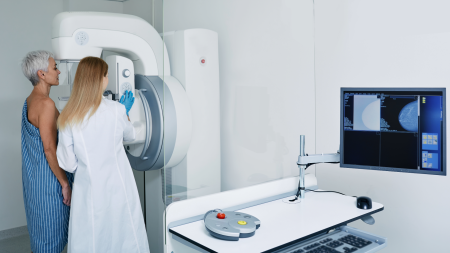
Breast cancer is the most common form of cancer in women worldwide, affecting almost 7,000 women in Switzerland every year. Early detection and modern treatment methods have greatly improved survival rates, but further progress hinges on a new challenge: how to properly integrate artificial intelligence into day-to-day care.
This is where the new “Lucerne Toolbox 3” comes in because it essentially represents a digital roadmap for breast cancer treatment. Developed by an international consortium of 112 experts, it provides a concise, evidence-based blueprint on how digital technology and AI can genuinely improve patient outcomes.
The Toolbox 3 has been published in the leading journal The Lancet Oncology and identifies 15 pressing research questions that need to be addressed in order to take AI from the prototype stage into clinical practice. “We take a holistic approach to breast cancer – from diagnosis through treatment to aftercare – and aim to develop useful tools to address the various challenges patients face throughout their journey,” says Toolbox creator Professor Peter Dubsky, who as head of the Tumour and Breast Cancer Centre at Hirslanden Klinik St. Anna treats breast cancer patients every day and is also titular professor of clinical medical sciences at the Faculty of Health Sciences and Medicine at the University of Lucerne. “The Toolbox is like a digital roadmap for breast cancer, where each approach represents one of the main points on a compass, and is designed to turn the buzz around AI into a reality for breast cancer research.”
Perhaps the most promising project in Toolbox 3 is the goal of predicting complete tumour remission with such accuracy that, in future, surgery will no longer be necessary for some patients. The idea that an AI-assisted biopsy might suffice in exceptional cases, thereby eliminating the need for surgery, also clearly demonstrates just how significant the potential benefits of digital technologies can be and how important it is to thoroughly evaluate these approaches.
Clinical expertise for the digital world
While new digital technologies have the potential to transform the health care sector, a lack of practical expertise in applying them continues to impede their safe integration within the clinical setting. “Digital technologies are developed by computer scientists, but we need medical experts and patients to set the direction for where and in what ways we should use AI,” says Dr André Pfob, Department of Obstetrics & Gynaecology at Heidelberg University Hospital and St Elisabeth’s Hospital in Heidelberg, who carries out research into medical informatics and breast cancer at the University of Heidelberg’s Faculty of Medicine. “It is for this reason that our motto has always been: don’t ask what AI can do for you; ask what you can do for AI.”
The roadmap will thus initially focus on four main areas: earlier and more accurate detection, precision treatment that is less invasive, support for individualised therapies, and the promotion of digital technology to encourage patients to manage their own care.
Barriers to digital health care
The path to integrating AI into breast cancer treatment is not without its challenges. Regulatory approvals, ethical safeguards and digital literacy remain critical obstacles. Algorithms need to be transparent, fair and rigorously vetted to avoid widening inequality in the provision of health care.
However, as the “Lucerne Toolbox 3” clearly shows, technology alone cannot transform the health care sector. By aligning its research goals with the needs of patients and clinicians, AI is paving the way for transformative advances along the entire treatment journey. Implementing the recommendations has the potential to improve patient outcomes, increase the efficiency of care and set new standards in the integration of digital health technologies in oncology. “It’s not a question of replacing doctors with algorithms,” says Dubsky, “but of building up the evidence base required to make AI a safe and trusted element of patient care.”
The “Lucerne Toolbox 3” is therefore exactly what is needed: a pragmatic guide, a navigational tool in digital breast cancer medicine, which is poised to transform data-driven pledges into tangible advances for patients.
Further information
Podcast: “The Lancet Oncology in conversation with” Dr Andre Pfob (Department of Obstetrics & Gynaecology, Heidelberg University Hospital) and Professor Peter Dubsky
About the Lucerne Toolbox consortium
The Lucerne Toolbox consortium is a multidisciplinary network of leading experts in breast cancer treatment, including surgeons, radiologists, oncologists, pathologists, gynaecologists and radiotherapists, as well as patient advocates from 27 countries. The network was founded in 2019 by Peter Dubsky (head of the Tumour and Breast Cancer Centre at Hirslanden Klinik St. Anna and Titular Professor of Clinical Medical Sciences at the Faculty of Health Sciences and Medicine, University of Lucerne). The goal is to develop clear, evidence-based treatment protocols for the entire patient journey and to provide important new impetus for research, ranging from prevention to aftercare and quality of life. Close collaboration between different disciplines allows for a holistic approach to care, where the focus is not on individual areas of expertise but on the benefits for the patient.
The first two editions of the Lucerne Toolbox focused on clearly defined clinical situations. The “Lucerne Toolbox 1” set out recommendations on conserving breast tissue following chemotherapy, while “Lucerne Toolbox 2” developed specific guidelines for the management of lymph nodes in early-stage breast cancer. The new “Lucerne Toolbox 3” represents a significant step forward: a comprehensive digital toolkit for the provision of care across the board.
About Hirslanden
Hirslanden is synonymous with high-quality, responsible, patient-centred and highly efficient integrated health care. From birth to old age and from prevention to treatment, the Hirslanden Group is committed to further developing the “continuum of care” at every stage, both in person and online, together with private and public partners.
Hirslanden sets itself apart in the market as a provider offering first-class medical care designed to improve patients’ quality of life thanks to its team of highly qualified, independent specialists with many years of experience, outstanding and attentive patient care, and exceptional services that ensure a high standard of comfort in a warm and supportive environment. Interdisciplinary medical centres of excellence, specialist departments and professional partners work together to provide the best possible personalised diagnosis and treatment, even in highly complex cases, in both inpatient and outpatient care.
The Hirslanden Group is made up of 16 hospitals in nine cantons, many of which have an A&E department. It also operates five outpatient surgery centres, 18 radiology departments and six radiotherapy centres. The Group employs over 2,500 partner doctors and approximately 11,000 staff. The Hirslanden Group was established in 1990 following the merger of several hospitals and is now part of the Mediclinic Group.